I’m Neda Hundertmark – trainer, mentor and coach for follow-through and change in Bochum. I support people who know what they want to change and are stuck at a decisive point.
Most of the people I work with have long known what they would have to do. They have read, thought, made plans. And still the step stays undone. Not because they lack discipline – but because something in them still needs different conditions before movement becomes possible.
That’s what I stand for: follow-through that doesn’t come from more pressure, but from mind, body and context coming together. We look at what you think, what you feel and what has made your behaviour so far make sense in your surroundings. And then we take a step that is small enough for you to take – and big enough that something changes.
What you have understood is not yet what you can do. In between lies experience – and that is exactly where we work.

Two moments in my life have shaped the way I look at change. At 21 I was given a diagnosis that put a very narrow frame around my life. At 32 I heard a prognosis for my son that expected hardly anything of him. Both times a verdict stood in the room that sounded very final.
What I took from this is not a hero’s tale. It’s something quieter: that the picture others have of a life doesn’t have to be the last word. That development can begin where nobody expects it. And that it makes a difference whether you wait – or whether you begin, in small steps, with what is possible right now.
That’s why I believe in development and action. Not as a formula that solves everything – but as an attitude that opens up room.
Since then, one question above all has stayed with me: What does a person need in order to actually do what they know? That question was with me in the real estate business, in the classroom as a teacher of mathematics and chemistry – and today it is the core of my work as a trainer, mentor and coach. To me, people are not cases. They are stories that may go on.
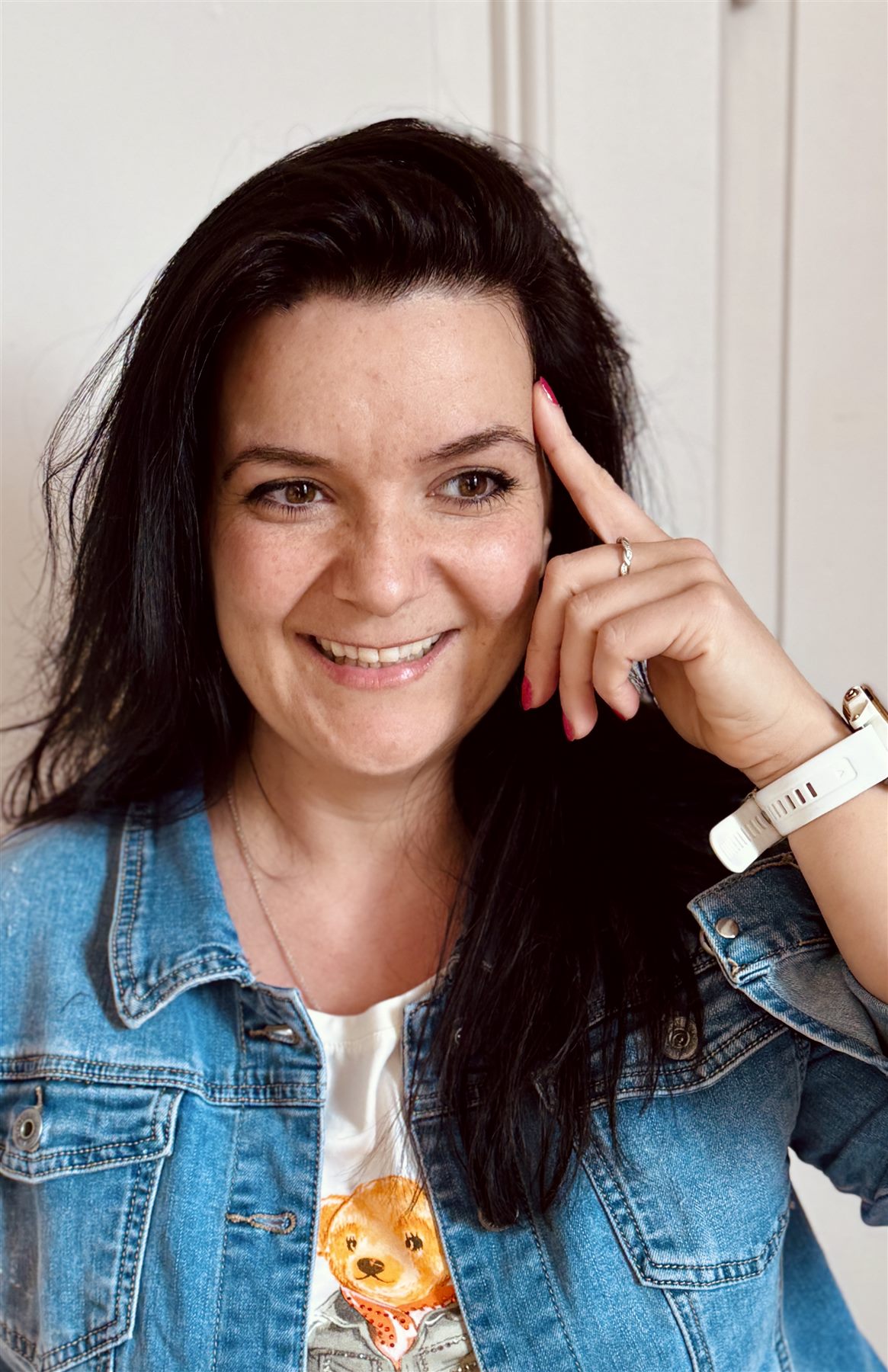
My mother is from Bulgaria, my father from Germany. My husband comes from Montreal, Canada, and I myself lived and worked in Canada for years. I grew up multilingual and with German-Bulgarian roots – and learned early that the same action can mean something completely different depending on the context. What is polite in one family comes across as distant in the other. What counts as hesitation here is respect there.
That shapes how I work. I don’t just ask what you do, but in which surroundings your behaviour has made sense so far. And I like to translate – between languages, but also between what you think and what you feel. In coaching I work in German, English and Bulgarian.
I didn’t learn reframing in a training course, but at my grandmother’s kitchen table. When I said as a child, “I lost, so I’m no good”, there was no consolation – but: “No, now you know whom you no longer have to trust.” Or: “You didn’t lose, you learned.” Years later, in the middle of my NLP training, this kitchen-table sentence suddenly got a name – and origin and craft were speaking the same language all at once.
Grandmother’s kitchen table – why reframing was our family’s language (in German) →

For a long time I believed that understanding was enough. That a good thought would eventually turn into action by itself. Today I know: between knowing and doing lies experience. What you have only played through in your head remains an idea. What you have experienced once – in your body, in motion, in a real situation – becomes something you can draw on.
That’s why I don’t work in conversation alone. We notice what your body feeds back: posture, breath, inner reactions. We try out how a yes feels and how a no feels. If it fits, we walk a stretch – outdoors, in the forest, by the water. Some things are easier to move when we move ourselves.
I don’t interpret your body and I don’t tell you what you feel. You notice, I ask questions – and together we look at what changes when you shift your posture, breathe more deeply or walk a few steps.
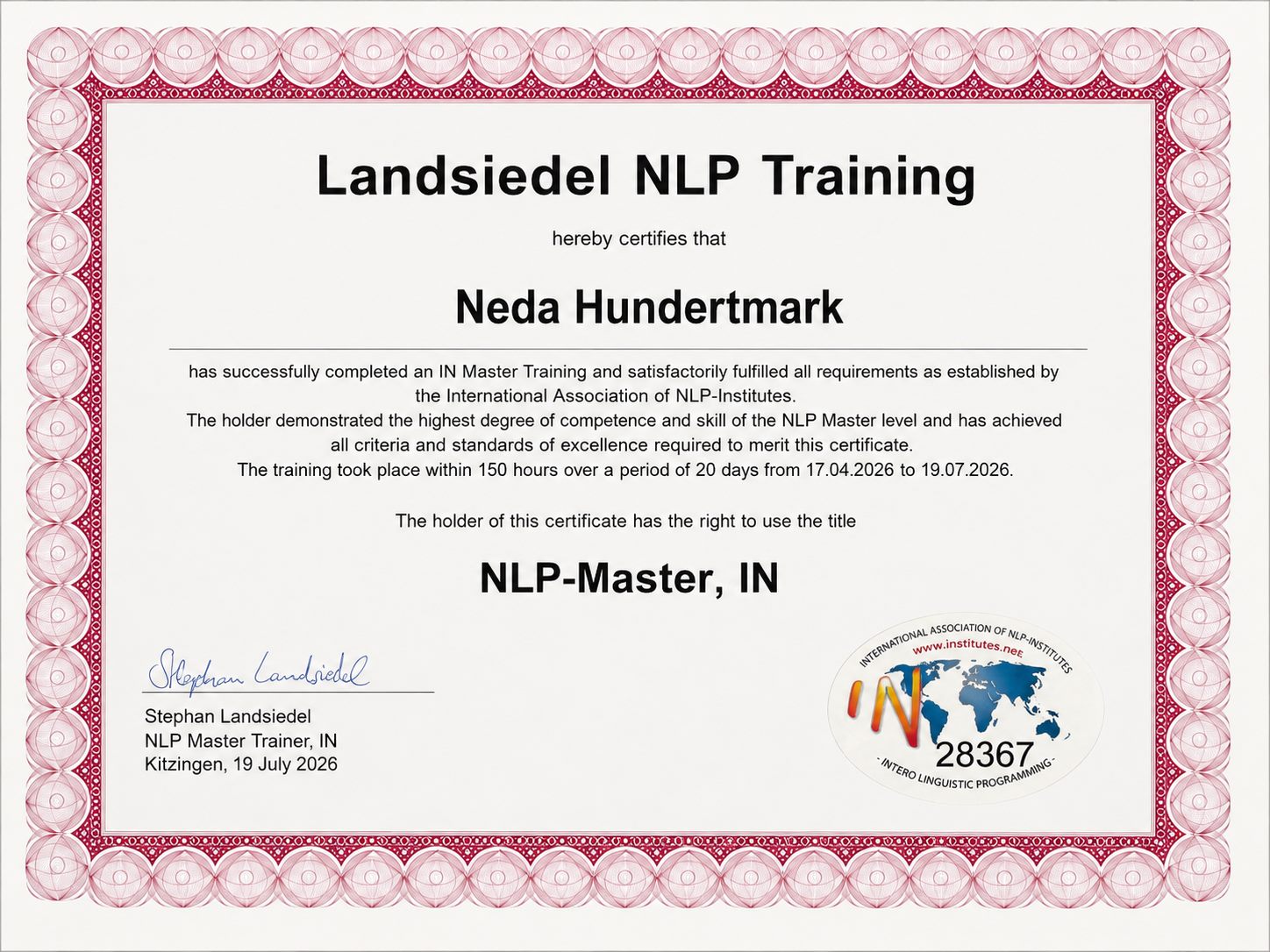
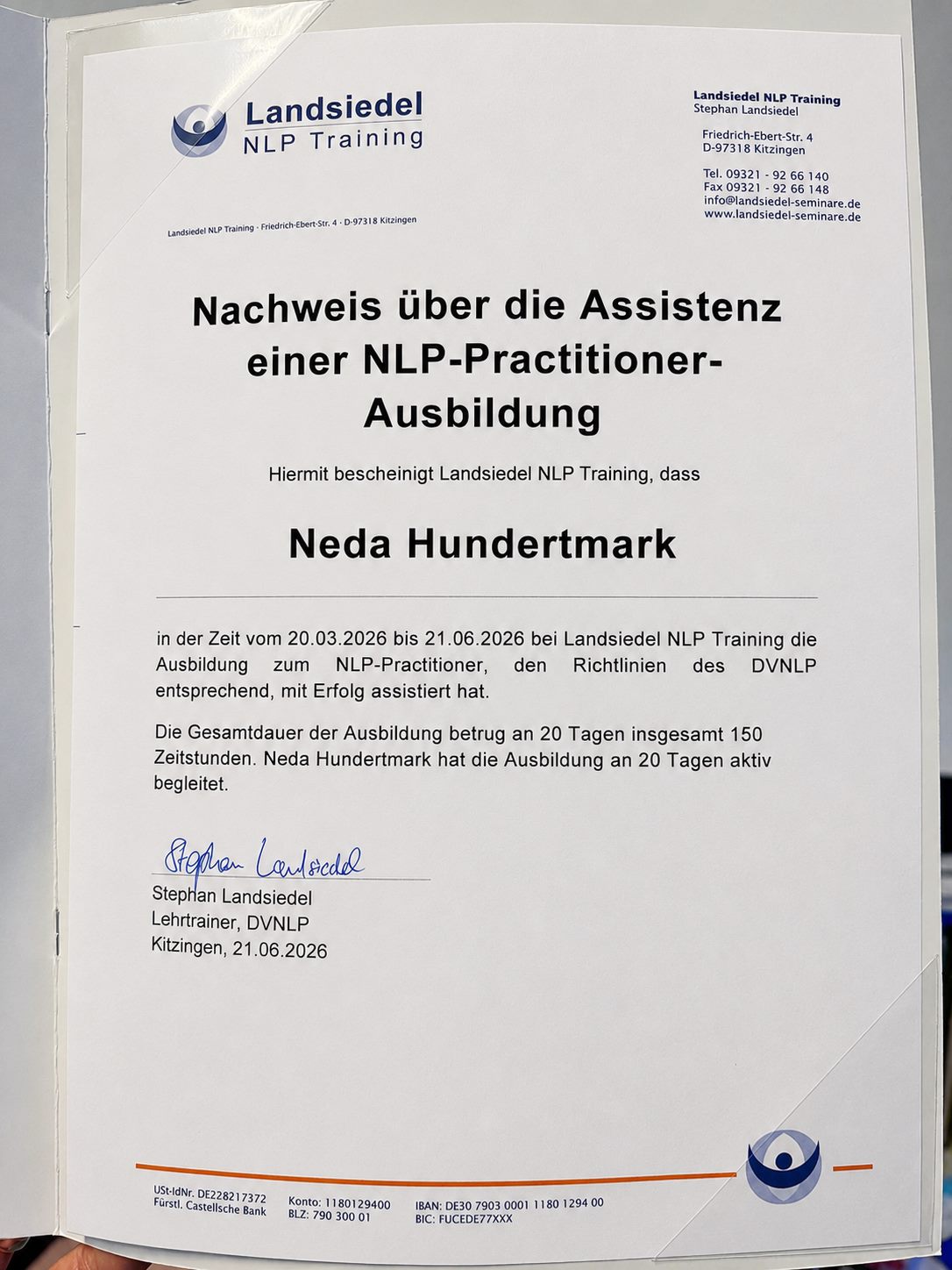
I think it matters that you know who you’re dealing with. So here it is, honestly and without embellishment:
Two certificates you can take a look at:
Much of what I do in coaching, I have written down. HANDELN is volume 1 of my “Series for a Successful Life” – a short book, written in German, about seven steps from knowing to doing: Hinhören, Anerkennen, Nachfragen, Dahinterliegende Absicht, Erleben, Losgehen, Nachjustieren (listening closely, acknowledging, asking further, the underlying intention, experiencing, setting off, readjusting). With exercises you can try the same day.
In coaching I work with the 4T – Trennen · Tun · Tragen · Transformieren, German for Separate · Act · Sustain · Transform. They describe the path change usually takes – first sorting, then taking a step, then holding on to the new until it becomes experience.
30 minutes · free & no obligation · online or by phone
Free intro call →You don’t need to know which coaching you need, and you don’t have to explain your topic perfectly.